
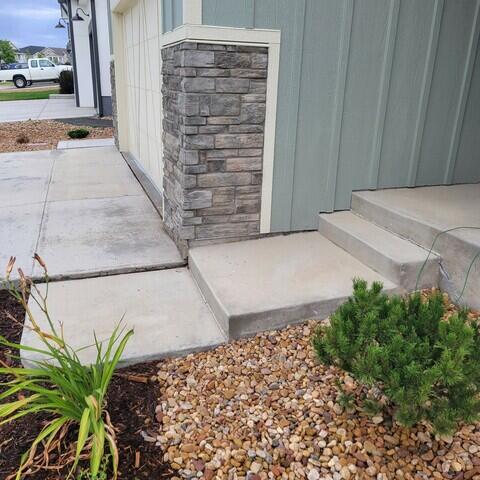
Ask any concrete contractor where the hardest place in America to keep concrete alive is, and Colorado's Front Range will be near the top of the list. The reason is freeze-thaw cycling — and understanding it is the key to making your driveway, patio, and sidewalks last decades instead of years.
What Freeze-Thaw Cycling Actually Does
Concrete is porous — it absorbs water like a very dense sponge. When that water freezes, it expands by about 9%. That expansion creates internal pressure strong enough to crack concrete from the inside out. One freeze does minimal damage. But Northern Colorado's sunny winter days and frigid nights mean concrete here can freeze and thaw more than 100 times per year, compared to 10-20 cycles in most northern states where it just stays frozen.
Each cycle ratchets the damage forward: micro-cracks widen, surface pores enlarge and admit more water, and the next freeze does more damage than the last.
The Warning Signs
Freeze-thaw damage shows up in a predictable sequence. Catch it early and repairs are cheap; catch it late and you're re-pouring:
- Spalling and flaking: the top surface pops off in thin flakes, exposing aggregate.
- Pitting: small craters across the surface, often accelerated by de-icing salts.
- Widening cracks: hairline cracks grow visibly wider each spring.
- Crumbling joints and edges: corners and expansion joints deteriorate first.
- Slab movement: heaving in winter, settling in spring as saturated soil shifts.
How to Protect Your Concrete
The whole game is keeping water out. Three moves matter most:
First, seal your cracks and joints. Every unsealed crack is a funnel pouring water under and into your slab. Professional flexible sealant moves with the concrete through temperature swings, unlike rigid DIY fillers that pop back out within a season.
Second, mind your drainage. Downspouts should discharge well away from concrete, and lot grading should carry water away from slabs, not along their edges.
Third, skip the harsh de-icers. Magnesium chloride and rock salt dramatically accelerate surface damage. Use sand for traction, or a calcium magnesium acetate product if you must melt ice.
When Damage Has Already Started
Already seeing spalling, wide cracks, or settlement? The order of operations matters: lift any sunken slabs first, then seal cracks and joints, then consider a protective coating. A premium coating like Vuba Stone resurfaces freeze-thaw-damaged concrete completely — it's UV-stable, waterproof, and rated for 15-25 years in exactly our climate.